




There’s a moment in building a pet food brand when you have to be honest with yourself.
For us, that moment came when we started digging into the science of canine nutrition — properly digging, not just reading the surface. What we found was uncomfortable. Because what we had been calling a personalised meal plan wasn’t really personalised at all.
We asked for the dog’s name. We asked for their weight and age. We adjusted the portion size. We put their name on the packaging.
And then we sent every dog essentially the same formula.
That’s not personalisation. That’s a label. And we were doing it — along with most of the rest of the industry — because it was what the market expected, and because the alternative was genuinely hard.
This is the story of what we learned, why we changed, and what personalisation actually has to mean if it’s going to make a real difference to a dog’s health.
What the Industry Calls Personalisation
Walk through the personalized pet food market and you’ll find a familiar pattern.
Most brands start with a quiz. Name, breed, age, weight, activity level. Sometimes a health goal — weight loss, joint health, a shinier coat. The quiz feels thorough. It feels like the brand is taking your dog seriously.
What happens next is where it gets complicated.
In most cases, the quiz determines two things: which product from the existing range to recommend, and how much of it to feed. The portion is adjusted. The packaging is printed with your dog’s name. The delivery arrives looking like it was made specifically for them.
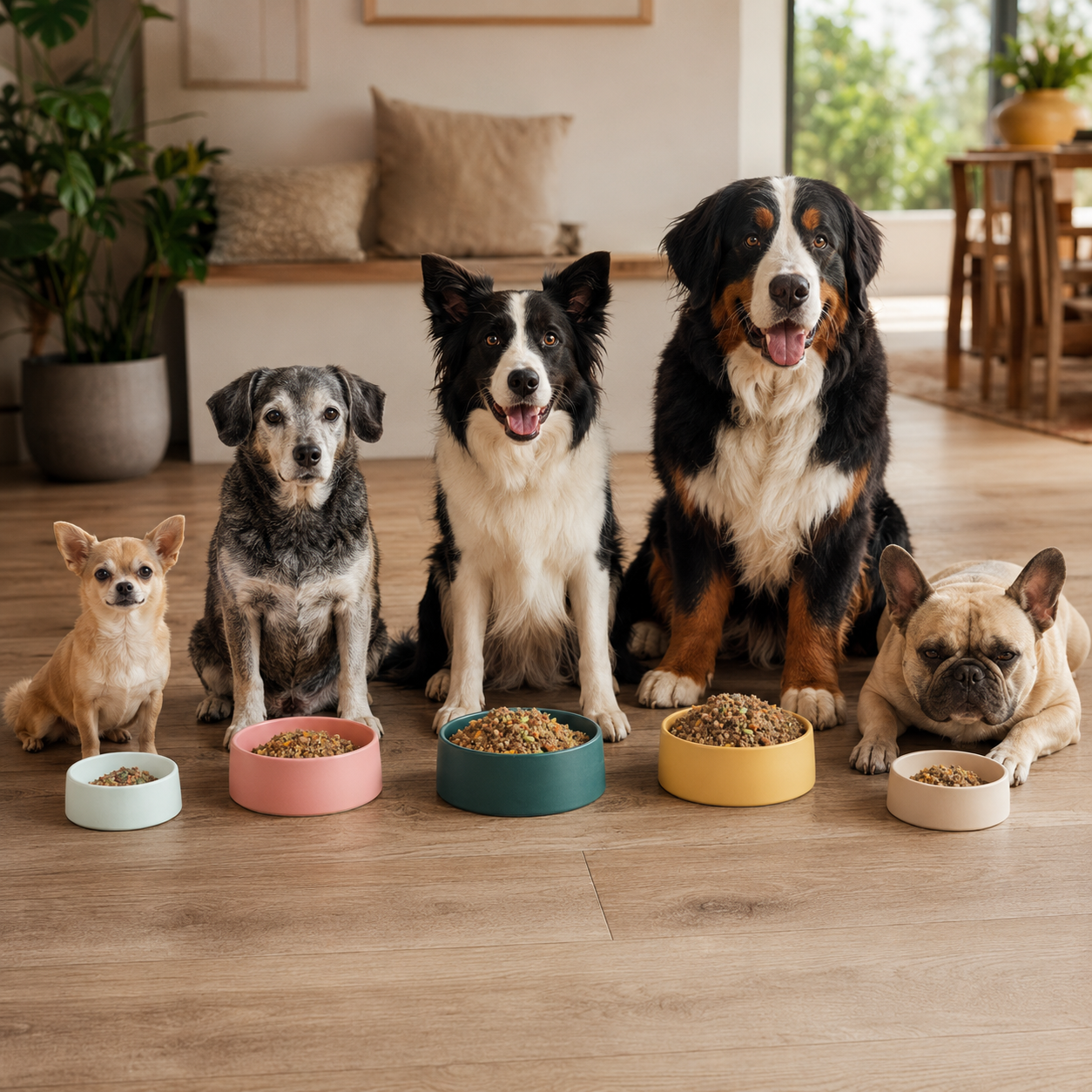
But the formula inside — the actual nutritional composition, the protein concentration, the vitamin and mineral density, the omega-3 levels — is identical for every dog. A 5 kg Maltese and a 30 kg Labrador. An active working dog and a neutered apartment dog who barely leaves the sofa. Same formula. Different portion.
That’s it. That’s the personalisation.
The label changes. The bag changes. The portion changes. The nutrition doesn’t.
We know this because we did it. And we know why it’s done — because formulating genuinely different recipes for dogs at different nutritional intake levels is expensive, complex, and requires a level of nutritional science that most brands haven’t invested in.
It’s easier to personalise the label than the food.
What Changed for Us
We started asking a question that the industry doesn’t ask enough: does this dog’s food actually deliver complete nutrition at the amount this dog eats?
Not the reference dog. Not the average dog. This dog. The one with the specific weight, the specific activity level, the specific metabolic rate — eating the specific amount of food that keeps them at a healthy weight.
The answer, in most cases, was no.
Here’s why.
Nutritional standards — both AAFCO in the US and FEDIAF in Europe — are built around a reference dog consuming a specific amount of food per day. In scientific terms, this corresponds to a K factor of around 130, a measure of energy intake relative to metabolic body weight. This is the assumed intake level baked into the formulation of most commercial dog foods, including the ones marketed as personalised.
But most modern pet dogs — apartment dogs, neutered dogs, lower-energy breeds, senior dogs — don’t eat anywhere near that much. Many eat at a K factor of 75, 95, or 110. Some lower.
When a dog eats at K 95 but their food was formulated for K 130, they receive significantly fewer nutrients than the label was designed to deliver. Not because the food is poor quality. Because the formulation was never built for a dog eating that much less.
A different portion size doesn’t fix this. A different flavour doesn’t fix this. A personalised label doesn’t fix this.
Only a different formulation fixes this.
What Real Personalisation Has to Mean
If personalisation is going to make a genuine difference to a dog’s health, it has to address the formulation — not just the packaging.
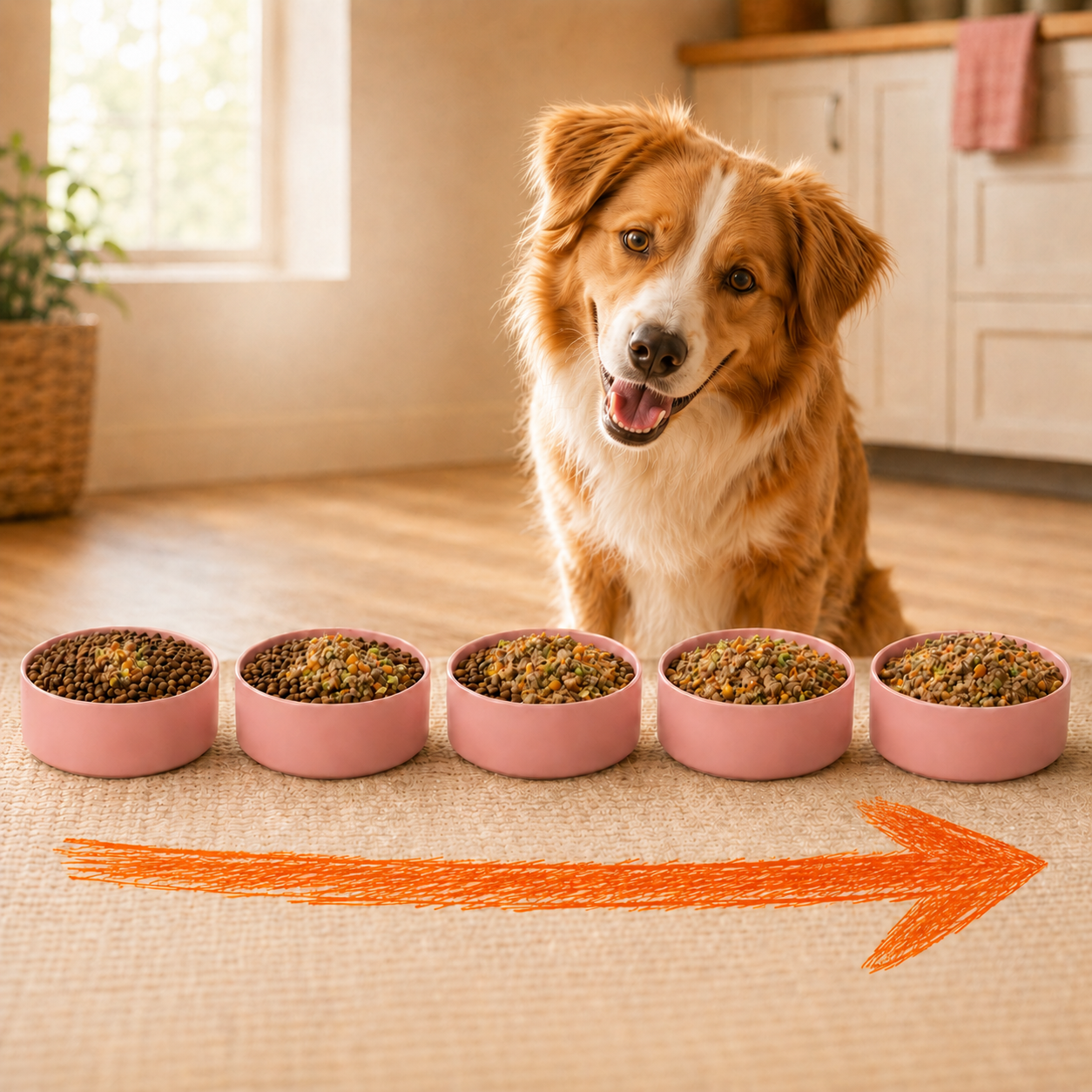
True nutritional personalisation means that a dog eating at K 75 receives a recipe with a higher nutrient density than a dog eating at K 110. More nutrition per calorie. More protein, more vitamins, more minerals — concentrated enough that even at the lower intake level, the dog receives complete nutrition.
It means that a puppy in the growth phase gets a formulation built to AAFCO and FEDIAF growth standards — not an adult maintenance formula with a smaller portion.
It means that a senior dog, whose appetite may be declining even as their need for high-quality, bioavailable nutrition remains the same, gets a formulation calibrated to that reality.
It means that when you tell a brand your dog’s details, the formula that arrives is genuinely different from what another dog of a different size, activity level, and intake would receive. Not just the amount. The composition.
This is what we set out to build after we acknowledged that what we had been doing wasn’t enough.
What We Built Instead
MyDoggo is the result of asking the harder question.
Every recipe in the MyDoggo range is available in multiple K factor variants — formulations calibrated to dogs eating at K 110, K 95, K 75, and K 60 for adults, and K 95 and K 75 for seniors. Each variant has a different nutritional composition, not just a different portion size. A dog eating at K 75 receives a more nutrient-dense formulation than a dog eating at K 110, because that dog needs more nutrition per bite to receive the same complete nutritional profile.
When you fill in the MyDoggo form, we use your dog’s details to estimate their K factor and match them to the appropriate formulation. Over the first two months, we observe how your dog’s intake settles and refine the formulation if needed. The plan adapts as we learn more about how your dog actually eats.
This is harder to build than a quiz that adjusts a portion size. It requires understanding the nutritional science behind energy intake and nutrient delivery. It requires formulating multiple versions of every recipe. It requires a manufacturing process that can produce made-to-order batches rather than standardised runs.
We do it because the alternative — calling something personalised when it isn’t — is something we’ve already tried. And we know where it falls short.
The Question Worth Asking About Your Dog's Food
If your dog is on a meal plan marketed as personalised, one question cuts through everything else:
Is the formula different — or just the portion and the packaging?
If the answer is just the portion and the packaging, then what you have is a well-presented standard diet. That’s not nothing — a good quality standard diet, fed in the right amount, is far better than a poor quality one. But it isn’t personalisation in any nutritionally meaningful sense.
Your dog’s name on the bag is a nice touch. What’s inside the bag is what matters.
Social Share